
App Store Ranking in 2026: How to Improve Visibility & Downloads

App Store ranking determines how visible your app is in search results and charts, directly impacting downloads. In 2026, ranking is influenced by metadata, keywords, user engagement, and algorithmic signals. Mastering these can mean millions in revenue.
What Is App Store Ranking and How Does It Work?
App Store ranking refers to an app's position in Apple's App Store search results and category charts. Apple's algorithms weigh factors like:
- Keyword relevance in title, subtitle, and description
- Download velocity (installs over time)
- User engagement (retention, sessions, crashes)
- Ratings & reviews (quantity, sentiment, recency)
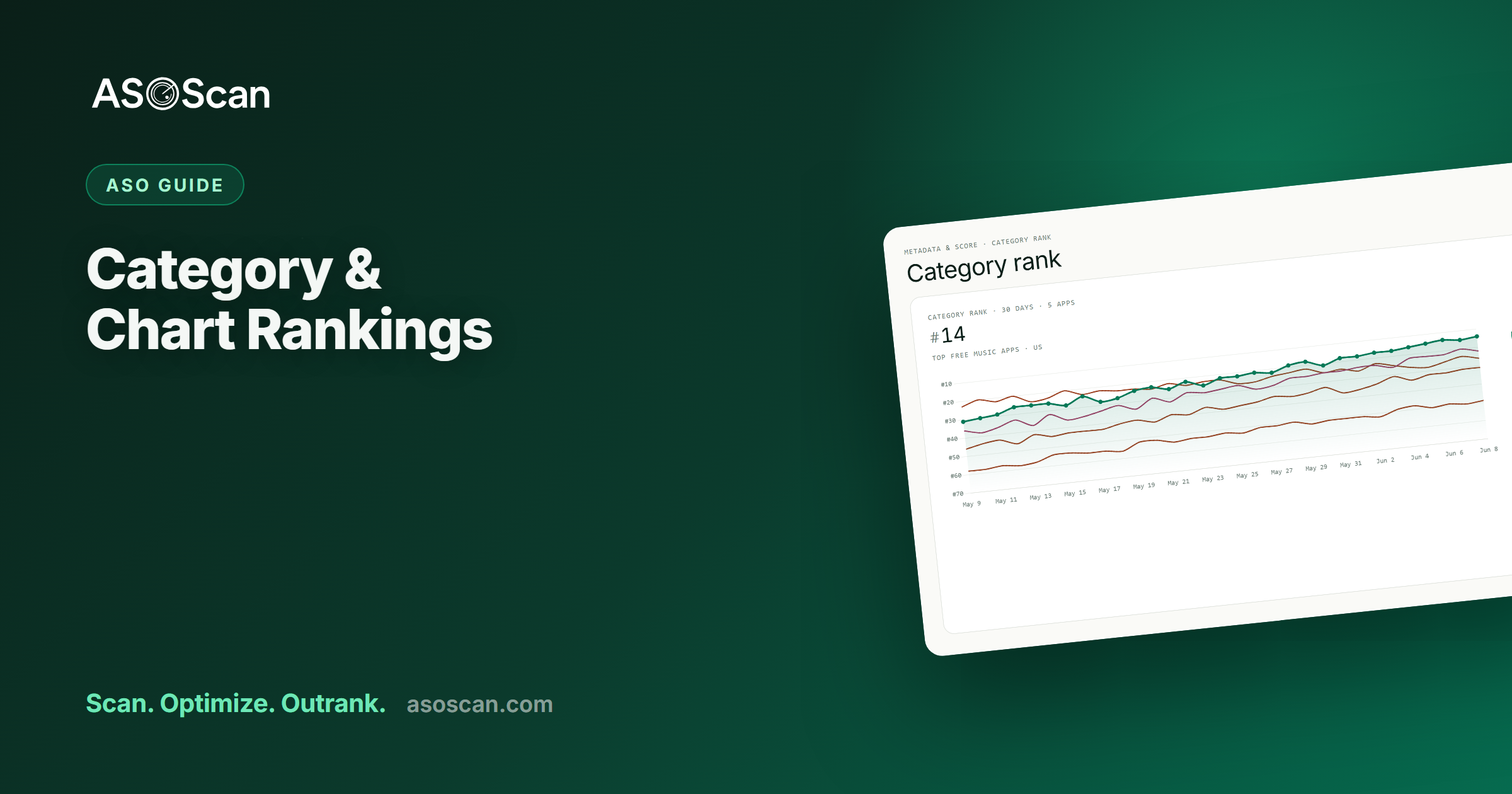
Apps that rank poorly are effectively invisible: most users never scroll past the first handful of results, so position decides whether your listing is seen at all.
Key Factors That Influence Your App Store Ranking in 2026
Metadata Optimization
- Title (30 chars max, highest keyword weight)
- Subtitle (30 chars, secondary keywords)
- Keyword field (100 chars, no spaces or repeats)
Performance Metrics
- Retention rates (Day 1, 7, 30)
- Crash rate (<1% ideal)
- Uninstall rates (track cannibalization)
Social Proof
- Rating averages (a higher average rating lifts conversion)
- Review volume (50+ reviews needed for trust)
How to Improve Your App Store Ranking: 5 Proven Strategies
Layered Keyword Targeting
Use tools like ASOScan to identify high-traffic, low-competition keywords. Place core terms in the title, variants in the subtitle/keyword field.A/B Test Icons & Screenshots
Test icon and screenshot variants with Apple's Product Page Optimization (PPO) tool rather than guessing.Boost Engagement Loops
Trigger review prompts after key actions (never on first launch). Fix crashes reported in App Store Connect.Leverage Seasonal Trends
Update metadata before holidays (e.g., "gift" keywords in December).Localize for Top Markets
Localized descriptions are rewarded in major non-English markets such as Japan and Germany.
App Store vs. Google Play Ranking: Key Differences
| Factor | App Store | Google Play |
|---|---|---|
| Keyword Weight | Title > Subtitle > Keywords | Description-heavy |
| Rating Impact | 4.5+ stars critical | 4.0+ suffices |
| Update Frequency | Weekly indexing | Near real-time |
| Video Autoplay | No | Yes (boosts conversions) |
Tracking Your App Store Rankings
- ASOScan: Unlimited keyword tracking, AI metadata suggestions, $15/mo starter plan
Common App Store Ranking Myths Debunked
❌ "More keywords = better ranking" → Apple penalizes stuffing
❌ "Paid installs boost organic rank" → Apple separates paid/organic traffic
❌ "Updates always help" → Only if they improve engagement
Future Trends: What’s Next for App Store Ranking?
- Voice Search Optimization: prepare for longer, natural-language keywords
- AI-Generated Previews: Apple may auto-create video previews from screenshots
- Privacy-Centric Metrics: Less focus on installs, more on retention
FAQ
How often does Apple update App Store rankings?
Rankings move continuously as install, engagement and rating signals accumulate. Treat a metadata change as something to measure over days, not hours.
Can ASO tools guarantee a top 10 ranking?
No tool can guarantee rankings. ASOScan provides actionable insights, but results depend on execution.
Do Apple Search Ads affect organic ranking?
No. While ads increase visibility, Apple confirmed they don’t influence organic rank (Apple Ads).
How many keywords should I target?
Focus on 5-7 core keywords in metadata, plus 15-20 variants in the keyword field (100-character limit).
This post is part of the fundamentals series built around the complete ASO guide and the ranking factors that matter in 2026.